


Club Profile
Overview
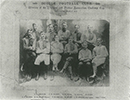
Bootle Football Club was an English football club based in Bootle, Lancashire. Established in 1879, the team was commonly known as the North Enders and played an early role in the development of football in the Liverpool area.
History
The club began life as Bootle St Johns AFC in 1879, founded by the Reverend Alfred Keely, who introduced association football to the area. Their first match took place in February 1880 against Everton, which they won 2–0. Later that year, the club simplified its name to Bootle F.C. and entered the FA Cup in the following season. During the 1880s, Bootle competed against local and regional teams, including Newton Heath (later Manchester United), Bolton Wanderers, and Blackburn Olympic, gaining recognition through matches and local cup successes, notably the Liverpool Cup in 1882.
In 1887, the club signed Andrew Watson, a former Scotland international, who is widely regarded as the first black professional footballer in history. Bootle became founder members of the Football Alliance in 1889, finishing as runners-up in the league in their first season and reaching the FA Cup quarter-finals. Despite this early promise, financial struggles and declining attendances contributed to instability, and the club entered liquidation in 1893 after only one season in the Football League Second Division.
Competition Performance
Bootle F.C. experienced their peak during the 1889–90 season, finishing second in the inaugural Football Alliance campaign, winning all home matches and reaching the FA Cup quarter-finals, where they were defeated 7–0 by Blackburn Rovers. Their league performance was generally stronger at home than away, and despite being founder members of the Football League Second Division in 1892, low attendances and financial pressures meant they resigned after finishing eighth. The club’s early years were marked by local derbies against Everton, often attracting large and passionate crowds, with some matches drawing up to 16,000 spectators.
Stadium
Bootle played their home matches at Hawthorne Road throughout their existence. The club invested in building new stands during their final years, which contributed to financial strain, but there were no relocations prior to their dissolution in 1893.
Identity
Bootle F.C. was nicknamed the North Enders, reflecting its local identity within Bootle. The team was notable for its early integration of players from diverse backgrounds, including Andrew Watson. Their kit was loosely coordinated, with players supplying their own shirts, often in blue and white, paired with a mixture of knickers and socks. Support for the club was concentrated locally, and matches against Everton became central events in the city’s football culture.
Rivalries
Bootle’s primary rival was Everton, with the two clubs contesting numerous competitive and heated local derbies in the 1880s. These matches drew significant crowds and were often contentious. Minor rivalries included contests against other Lancashire clubs such as Preston, Blackburn, and Burnley, but none matched the intensity or significance of the Merseyside derbies with Everton.